Helping seniors stay in the homes they worked for
Property taxes can rise faster than retirement income. A senior who has lived in the same home for 30 or 40 years shouldn’t have to choose between paying the property tax bill, buying groceries, or filling a prescription.
Michigan already offers seniors a Homestead Property Tax Credit. The problem is that the program has fallen behind. Today, seniors receive the full credit only at very low income levels, the benefit begins shrinking quickly as income rises, and the maximum credit is $1,900.
Chris Girard’s Michigan Senior Stay-in-Your-Home Plan would update that system, make the relief more meaningful, and make it easier for seniors who qualify to actually receive it.


Two bills. One goal: make it easier to stay home.
1. The Michigan Senior Homestead Relief Act
Chris Girard will introduce legislation to expand the existing senior Homestead Property Tax Credit.
Seniors with household resources of $50,000 or less would receive 100% of the credit they qualify for.
Above $50,000 in household resources, the credit would decrease by two percentage points for every additional $1,000, reaching zero at $100,000. For example, a senior with $68,000 in household resources would receive 64% of their otherwise eligible credit.
The plan would also:
Raise the maximum credit from $1,900 to $2,500. Both the maximum credit and income thresholds would continue to adjust with inflation.
Include renters and seniors living in manufactured housing communities. Michigan already recognizes a portion of rent as property tax for purposes of the credit, and the enhanced senior provisions would apply to renters as well as homeowners.
Keep the relief focused on modest homes. The existing taxable-value limit would remain in place and continue to adjust over time.
What could that mean for seniors?
Under the proposal, the plan estimates:

These examples are illustrative and are based on the standard Homestead Property Tax Credit formula used in the plan.
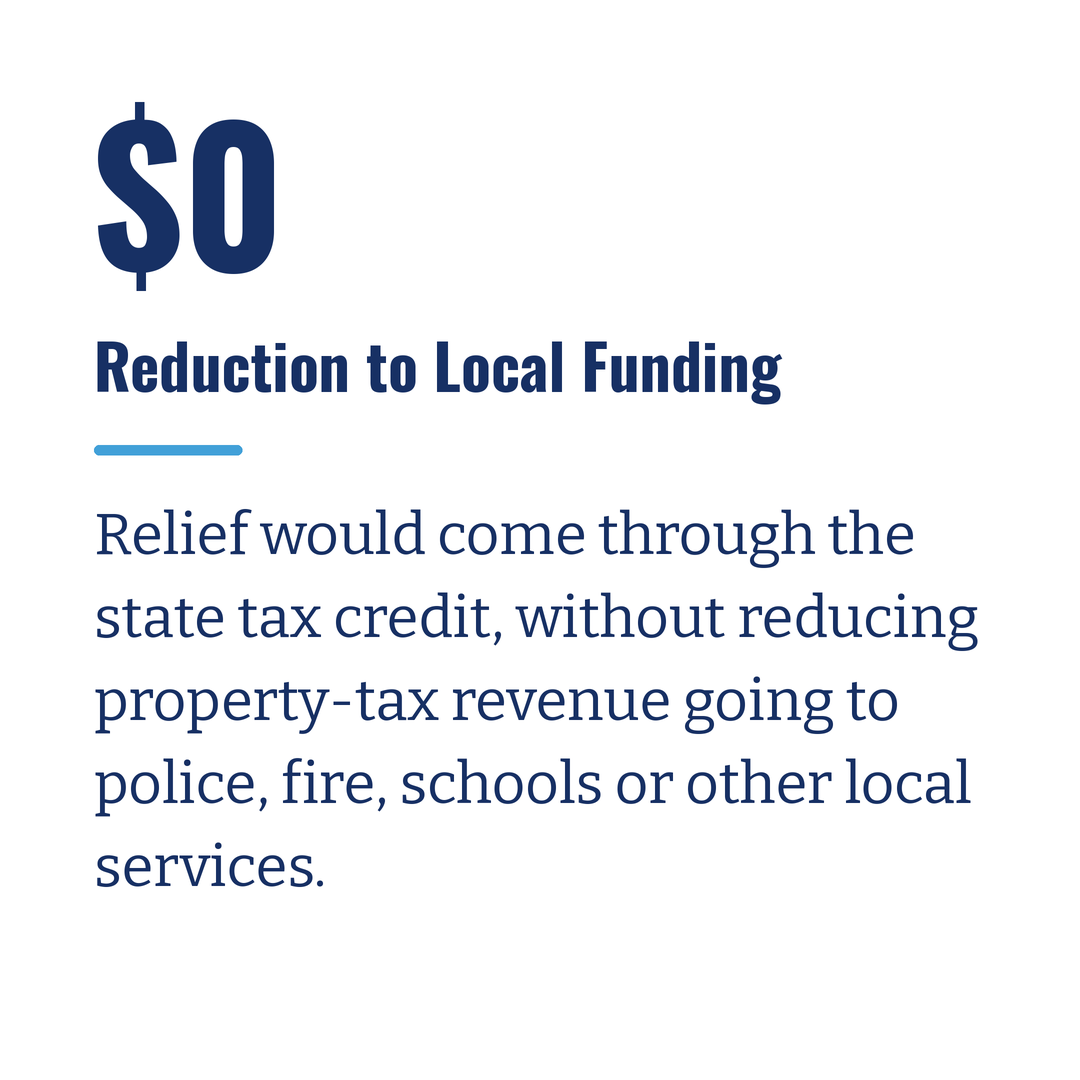
Not one dollar out of police, fire or local schools
The proposal provides relief through the state Homestead Property Tax Credit. It does not reduce what local governments, schools, police departments, fire departments, libraries, community colleges or road funds receive from property taxes.
The cost would be borne by the state General Fund rather than shifted onto local governments.
Chris has served nine years on the Bay City Commission and now serves as mayor. He has seen what happens when Lansing creates obligations for local communities without providing the money to pay for them.
Tax relief shouldn’t simply move the bill somewhere else.
2. The Senior Property Tax Credit Access Act
A tax credit doesn’t help anyone who never claims it.
The second part of the plan would make it easier for eligible seniors to find and receive the benefits already available to them.
The legislation would require the state to:
Conduct annual outreach to seniors whose records indicate they may qualify.
Prepopulate information the state already has whenever possible.
Create a simpler filing process for seniors who do not normally file a Michigan income tax return.
Clearly explain that the Homestead Property Tax Credit is refundable, meaning eligible residents can receive it even if they owe no state income tax.
Connect seniors with free tax-preparation assistance through existing programs such as VITA, AARP Tax-Aide and senior centers.
Report annually on how many eligible seniors are receiving the credit and how many are still being missed.
Make better use of programs that already exist
Michigan also has programs that many seniors never hear about.
Summer property tax deferment: Seniors age 62 and older who meet the income requirement can defer payment of summer property taxes by filing with their local treasurer.
Local poverty exemptions: Local boards of review may grant property-tax hardship exemptions under Michigan law, but eligibility standards and application procedures vary by community.
The plan would require state outreach to make seniors more aware of these existing options as well.
The bottom line
Lower the burden on seniors. Protect the local services families depend on. And make the system simple enough that people who qualify actually receive the help.
“You’ve worked hard all your life, paid your taxes, and made a home here. In retirement, you shouldn’t face a property tax bill higher than your original mortgage payments, just when you can least afford it. Seniors need a bigger tax credit, a simpler form, and leaders in Lansing who will do more than talk about the problem.”
Chris Girard