
A Michigan Talent and Manufacturing Plan
Michigan needs to do a better job connecting education, workforce development and economic policy.
That means helping people get the skills they need, removing barriers that keep them from working, helping Michigan employers find and retain workers, and making sure taxpayer-funded incentives actually produce jobs, higher wages and investment here at home.
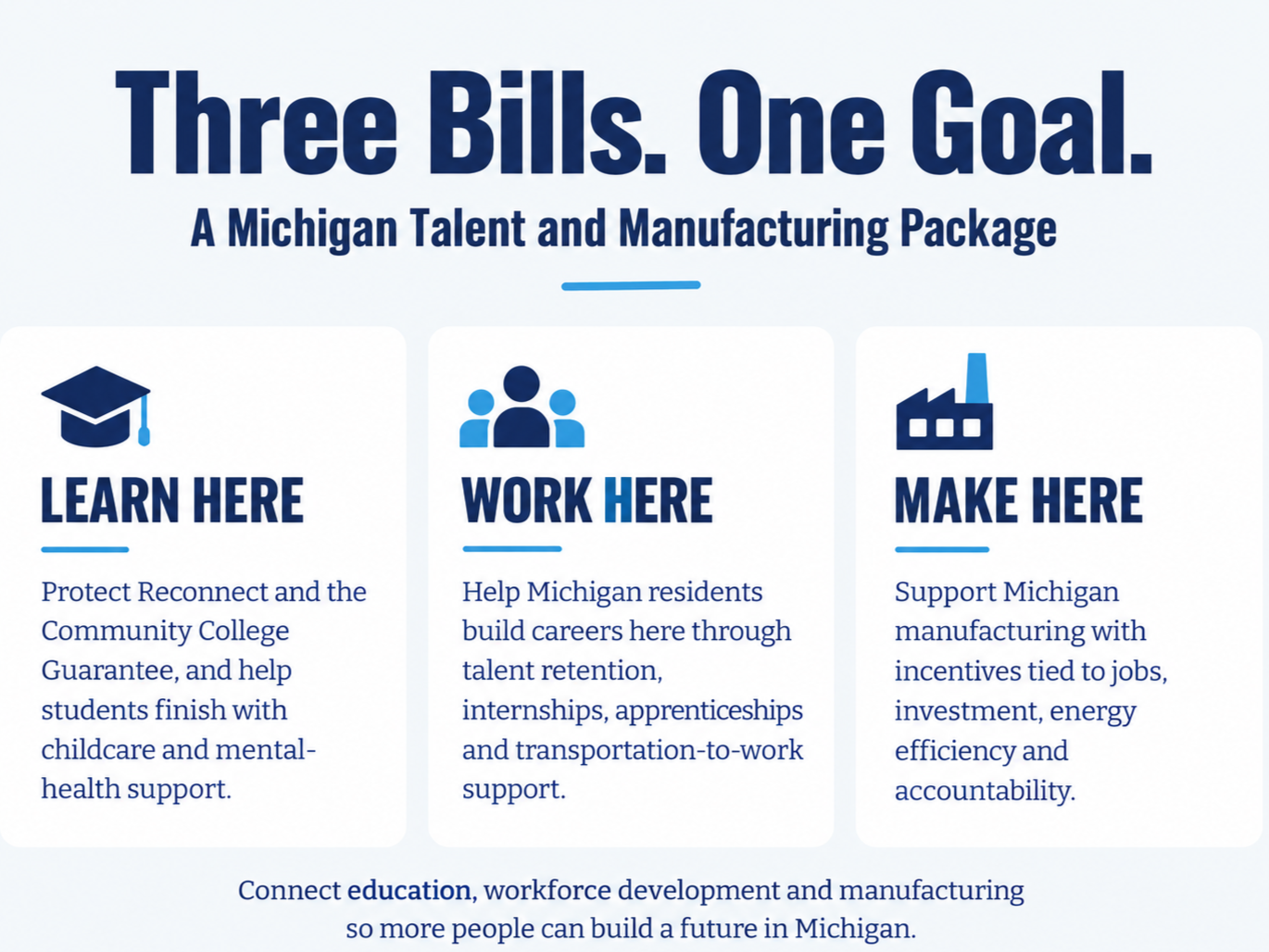
Chris Girard’s Learn Here. Work Here. Make Here. plan would accomplish that through three pieces of legislation.
Learn Here. Work Here. Make Here.
LEARN HERE
Make education and skilled training easier to access and complete.
Michigan has good education and training programs, but getting into a program is only part of the challenge. People also need to be able to finish.
The Michigan Learn Here Act would protect Michigan Reconnect and the Community College Guarantee while addressing some of the practical barriers that keep students from completing their education.
The plan would:
Maintain Michigan Reconnect for adults 21 and older seeking an associate degree or qualifying skills credential.
Protect the Community College Guarantee for recent Michigan high school graduates.
Create childcare grants for student parents, including evening, weekend and emergency childcare.
Expand access to mental-health and behavioral-health services at community colleges.
Require the state to publicly report graduation rates, credentials earned, employment after graduation, wages and program costs.
The goal is simple: if Michigan is investing in education and job training, we should make sure people have a realistic opportunity to finish and turn that training into a career.
WORK HERE
Help Michigan workers build careers here at home.
Michigan trains thousands of talented people every year. Too many leave the state or struggle to connect with employers who need their skills.
The Michigan Work Here, Stay Here Act would strengthen that connection.
It would create a targeted student-loan repayment program offering eligible workers in documented shortage occupations as much as $5,000 per year for up to four years if they live and work in Michigan.
Eligible fields could include nursing, mental health, teaching, skilled trades, public safety and other occupations where regional workforce data shows a genuine shortage.
The legislation would also:
Help small businesses, nonprofits and local governments offer paid internships.
Expand registered apprenticeship opportunities.
Support partnerships between employers, community colleges, labor organizations and Michigan Works!
Help communities address transportation barriers that prevent people from reaching major employment centers.
Allow regions facing workforce shortages or population loss to develop locally tailored talent-retention strategies.
Benefits would be earned over time and tied to actually living and working in Michigan.
MAKE HERE
Help Michigan manufacturers compete while requiring results for taxpayers.
Michigan should remain a place where things are built.
The Michigan Make Here Act would create a performance-based manufacturing credit tied directly to Michigan jobs, wages and investment.
Instead of writing companies a blank check, manufacturers would earn larger benefits when they create jobs, invest in Michigan facilities and strengthen Michigan supply chains.
The proposal would include a base credit tied to qualifying manufacturing energy costs, with larger credits available to companies that expand their Michigan workforce and make significant new investments.
The program would also:
Tie benefits to the number of Michigan employees.
Require qualifying new jobs to meet wage and employment standards.
Reserve a portion of available credits for manufacturers with fewer than 250 employees.
Reward investments that improve energy efficiency.
Provide additional incentives for companies that increase purchases from Michigan suppliers.
Encourage companies to bring manufacturing jobs and production back to Michigan.
Companies receiving enhanced incentives would enter into enforceable performance agreements.
If a company promises jobs or investment and fails to deliver, the state could reduce future benefits, recover previously awarded credits or require repayment.
Taxpayers should not bear the risk when promised economic benefits never materialize.
ONE SYSTEM. MEASURABLE RESULTS.
Michigan’s workforce and economic-development programs should work together instead of operating in separate silos.
The plan would move toward a simpler application process connecting employers with training assistance, apprenticeships, internships, manufacturing incentives and talent-retention programs.
It would also establish a public accountability system tracking results including jobs created and retained, wages, credentials earned, apprenticeships, private investment, Michigan supplier purchases and the cost to taxpayers.
Programs that consistently fail to produce measurable results should be changed or eliminated.
THE IDEA IS SIMPLE
Learn Here. Give people access to the education and training needed for good careers.
Work Here. Remove barriers to employment and connect workers with employers who need them.
Make Here. Keep Michigan competitive as a manufacturing state while demanding results for taxpayer investment.
Stay Here. Give more people a reason and an opportunity to build their careers, raise their families and make their lives in Michigan.
The goal isn’t simply to spend more money. It’s to make Michigan’s investments in education, workers and manufacturing work together.